
Last updated: November 2026
I have chicken skin on my arms, and I’ve heard many times that products with acids are what help. I haven’t tested any of them yet, so before buying anything, I wanted to know what actually works. I went through what dermatologists, beauty editors and the beauty community recommend, and the same few drugstore products kept coming up.
I also learned that chicken skin and strawberry legs, which people often mix up, aren’t the same thing. So here’s the difference, which acids help, and the products matched to each one.
The quick verdict
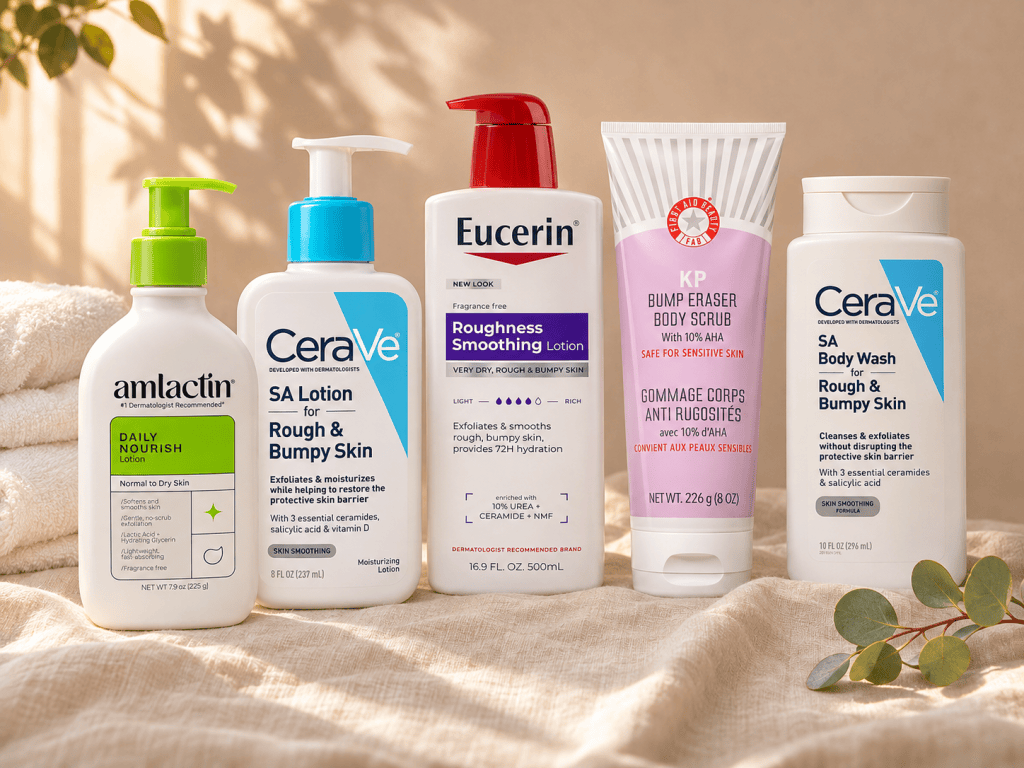
- Best budget pick for chicken skin: AmLactin Daily Nourish Lotion with 12% lactic acid (about $12 for 7.9 oz)
- Best all-rounder: CeraVe SA Lotion for Rough & Bumpy Skin ($15 to $20 for 8 oz)
- Best for very dry, rough skin: Eucerin Roughness Smoothing Lotion (about $15 for 16.9 fl oz)
- Best scrub, once or twice a week: First Aid Beauty KP Bump Eraser Body Scrub ($30 for 8 oz)
- Best for strawberry legs: CeraVe SA Body Wash ($13.99 for 10 fl oz), plus better shaving habits
I haven’t tested any of these yet. They’re research picks recommended by dermatologists and beauty editors. This post doesn’t contain affiliate links and isn’t medical advice.
The products at a glance
| Product | About | Key acid and strength | Best for |
|---|---|---|---|
| AmLactin Daily Nourish Lotion | $12 for 7.9 oz | 12% lactic acid | Chicken skin on a budget |
| CeraVe SA Lotion for Rough & Bumpy Skin | $15 to $20 for 8 oz | Salicylic + lactic acid (strength not shared) | Both, all-rounder |
| Eucerin Roughness Smoothing Lotion (formerly Roughness Relief) | $15 for 16.9 fl oz | 10% urea + AHA (AHA strength not shared) | Very dry, rough skin |
| First Aid Beauty KP Bump Eraser Body Scrub | $30 for 8 oz | 10% AHA (glycolic + lactic) + pumice | Weekly exfoliation |
| CeraVe SA Body Wash | $13.99 for 10 fl oz | Salicylic acid (strength not shared) | Strawberry legs |
Chicken skin vs strawberry legs: what’s the difference?
Chicken skin (keratosis pilaris)
Chicken skin is the nickname for keratosis pilaris, or KP. It looks like small, rough bumps, a bit like goosebumps that don’t go away, and it usually shows up on the backs of the upper arms and on the thighs. Cosmetic dermatologist Dr. Simon Zokaie told Woman & Home it’s “a very common form of dry skin characterized by hair follicles plugged by scale.”
The honest part: it doesn’t go away for good. Dermatologist Dr. Marisa Garshick told NBC Select that dermatologists consider it “manageable as opposed to curable,” and Dr. Lindsey Bordone said the bumps usually come back when you stop your routine. So the goal is smoother skin you keep up with, not a one-time fix.
Strawberry legs
Strawberry legs are the small dark dots in the pores on your legs, which look like the seeds on a strawberry. Cleveland Clinic dermatologist Dr. Matthew Janik explains they’re harmless and usually come from shaving with a dull razor or without shaving cream, clogged pores, or folliculitis (irritated, inflamed hair follicles). Dry skin makes them more noticeable, and KP on the legs can look similar.
The good news is that both get better with the same basics: gentle chemical exfoliation and lots of moisture. Strawberry legs also need a few changes in how you shave, which I’ve covered further down.
Which acids actually help?
These are the ingredients that keep coming up, and the American Academy of Dermatology lists all of them as options for KP:
- Lactic acid: an alpha hydroxy acid (AHA) that loosens dead skin and also hydrates. It’s the star of AmLactin.
- Salicylic acid: a beta hydroxy acid (BHA) that gets into pores, which is why it’s helpful for strawberry legs too.
- Urea: softens rough, thick skin and holds in moisture. Dermatologist Dr. Naveed Sami told NBC Select it’s a good step up if someone wants “to be a little bit more aggressive” with treatment.
- Glycolic acid: another AHA, often found in body scrubs and exfoliating lotions.
A higher percentage isn’t always better. Stronger acids work faster but are more likely to sting or irritate, especially on freshly shaved skin, so starting lower and going up slowly is the safer path. Also, not every brand shares its acid strength, which is why some products below say “not shared.”
Two tips from the AAD stood out to me. Put your moisturizer on within 5 minutes of getting out of the shower, while your skin is still damp. And give it time: if you don’t see any change after 4 to 6 weeks, it’s worth talking to a dermatologist.
The products, one by one
1. AmLactin Daily Nourish Lotion (12% lactic acid)
Researched, not tested
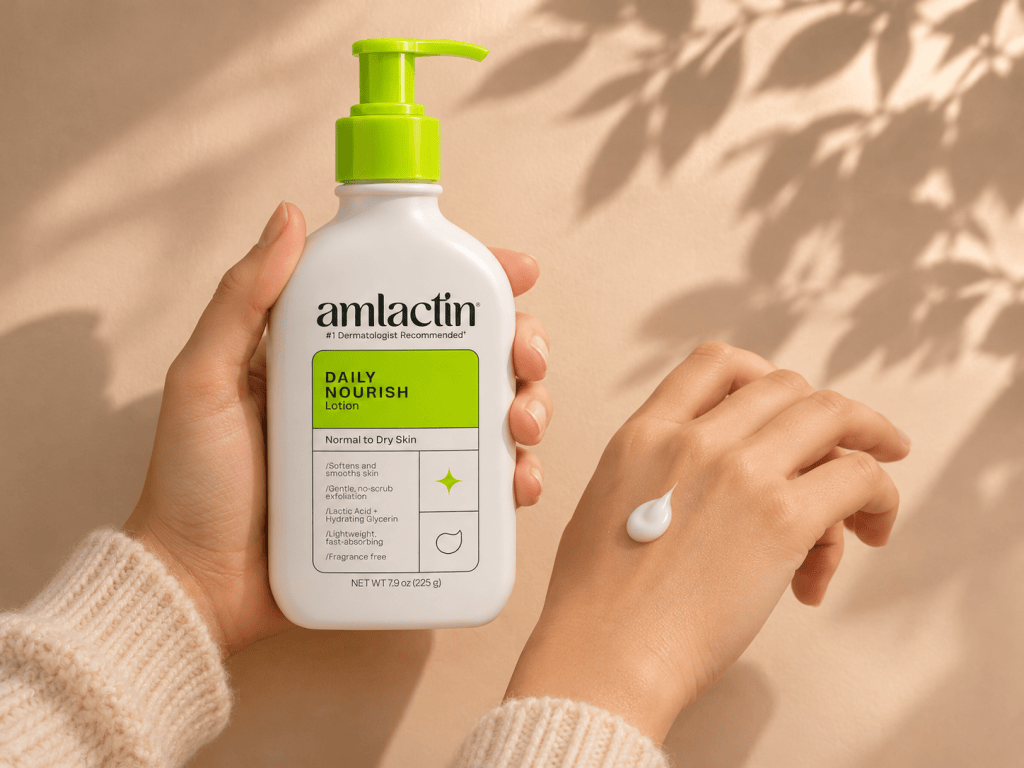
Price: About $12 for 7.9 oz at Amazon, Target and Walmart
This is one of the most recommended products for rough, bumpy skin, and it’s cheap. Its main ingredient is lactic acid. Talking about the brand’s Intensive Healing lotion, dermatologist Dr. Kiran Mian told Today that AmLactin “has alpha hydroxy acids that help clear off the top layer of dead skin cells.” It was also my pick for rough, bumpy skin in my body lotions post. You may still see it sold under its old name, AmLactin Daily Moisturizing Body Lotion.
Acid strength: 12% lactic acid
Pros
- One of the cheapest KP picks, and it exfoliates and moisturizes in one step
- AmLactin lists the 12% lactic acid strength on its website
- Easy to find at Target, Walmart and Amazon
Cons
- It can sting on freshly shaved or irritated skin
- Lactic acid can make your skin more sensitive to the sun
- It’s not the strongest option. AmLactin’s KP Bumps Be Gone and Intensive Healing lines use 15% lactic acid if you need more
Best for: Chicken skin on your arms when you want to start on a budget.
2. CeraVe SA Lotion for Rough & Bumpy Skin
Researched, not tested
Price: $15 to $20 for 8 oz at Amazon, Target and Walmart
This one combines salicylic acid and lactic acid with ceramides, which help your skin barrier. Dermatologist Dr. Robyn Gmyrek told NBC Select, “I like this product because it has lactic acid and salicylic acid to smooth.” Dermatologist Dr. Angela Lamb told Today it’s “easy to find at most drugstores.” There’s also a richer SA Cream in a tub if you want something thicker for winter.
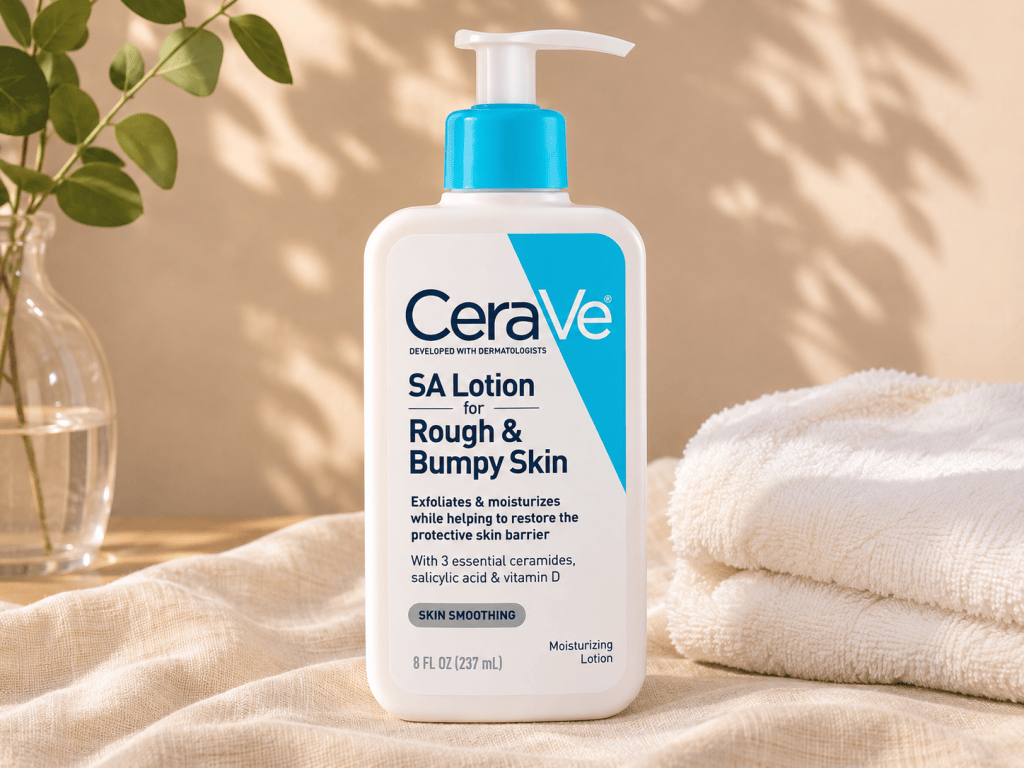
Acid strength: Salicylic acid and lactic acid (listed as ammonium lactate). CeraVe doesn’t share the percentages.
Pros
- Two acids plus ceramides, so it exfoliates while supporting your skin barrier
- Fragrance-free
- Sold in almost every drugstore
Cons
- CeraVe doesn’t list the acid strength, so it’s hard to compare with others
- If your skin is very dry, the richer SA Cream may feel better in winter
Best for: Both chicken skin and strawberry legs. If you only buy one product, this is the safest all-rounder.
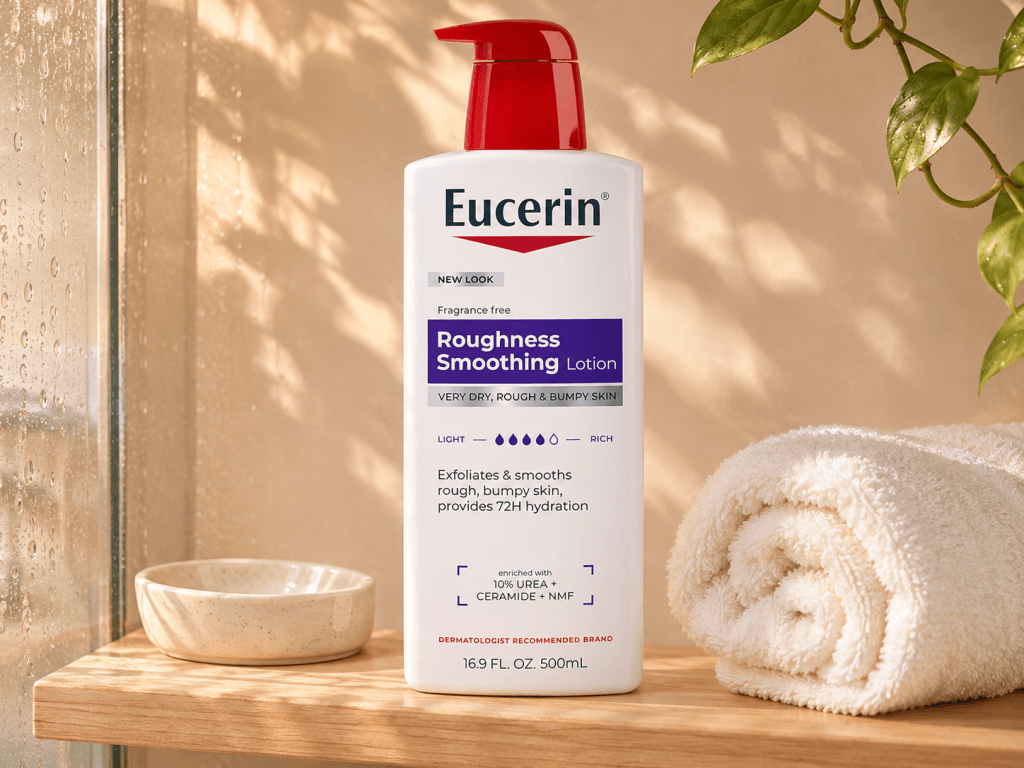
3. Eucerin Roughness Smoothing Lotion (formerly Roughness Relief)
Researched, not tested
Price: About $15 for 16.9 fl oz at Walmart and Amazon
This is the urea pick, and you get a big bottle for the price. Eucerin recently gave it a new look and a new name, Roughness Smoothing Lotion, so you may see either name in stores. It’s fragrance-free and made for dry, rough, bumpy skin. Dermatologist Dr. Michael Cameron recommended it to NBC Select for minimizing bumps.
Acid strength: 10% urea, plus an AHA. Eucerin doesn’t share the AHA percentage.
Pros
- The only urea pick in this post, at 10%, which helps soften thick, rough skin
- A big 16.9 fl oz bottle for about $15
- Fragrance-free, paraben-free and dye-free
Cons
- Eucerin doesn’t say how much AHA it contains
- Eucerin’s website includes a sunburn alert because of the AHA, so you’ll need sunscreen on exposed skin
- It’s on the rich side (Eucerin rates it 4 out of 5 on its light-to-rich scale), so it may feel heavy in summer
Best for: Very dry chicken skin, especially in winter.
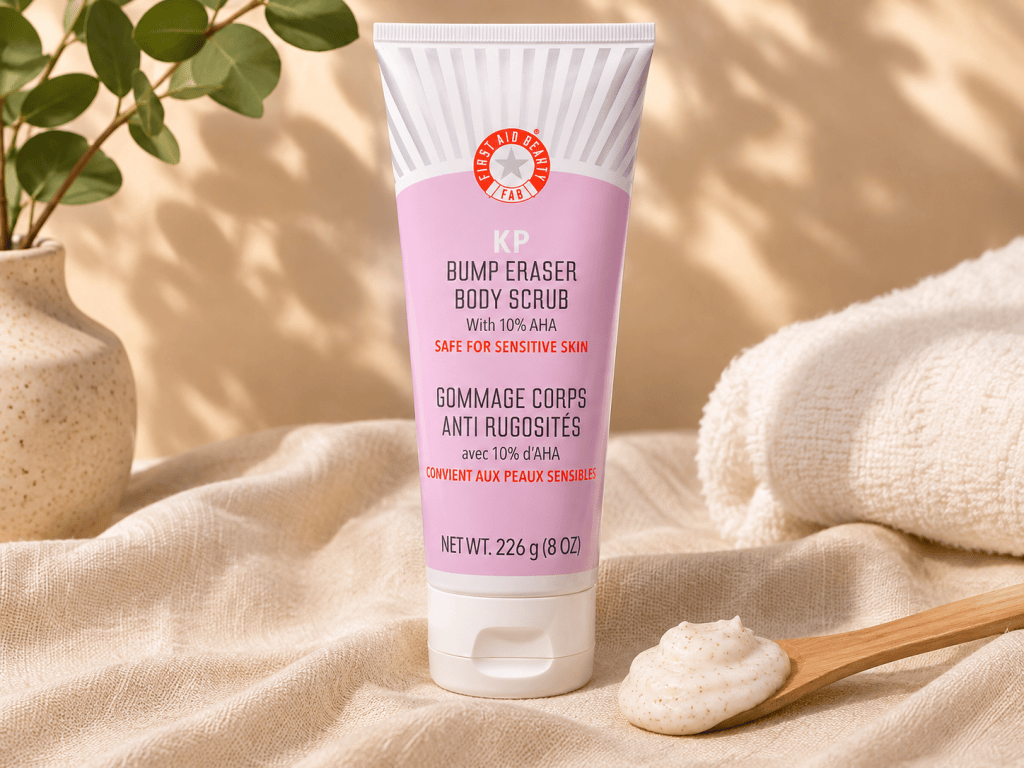
4. First Aid Beauty KP Bump Eraser Body Scrub
Researched, not tested
Price: $30 for 8 oz at Sephora and First Aid Beauty
This scrub is one of the most mentioned KP products in the beauty community, and it showed up in almost every dermatologist list I read. It mixes glycolic and lactic acid with pumice beads. Dermatologist Dr. Margarita Lolis told Today the pumice beads “mechanically remove dead skin cells.”
Acid strength: 10% AHA (glycolic and lactic acid), plus pumice beads
Pros
- It exfoliates two ways: acids plus a gentle physical scrub
- The acid strength is clearly labeled
- One of the most recommended KP scrubs by dermatologists
Cons
- The most expensive of the five
- Easy to overdo. Dr. Garshick suggests physical exfoliation only once or twice a week, and dermatologist Dr. Rachel Nazarian told Bustle the most common mistake she sees is “using a physical exfoliator to scrub the bumps away”
- Not for irritated or freshly shaved skin
Best for: A weekly boost alongside a lotion, not as your only step.
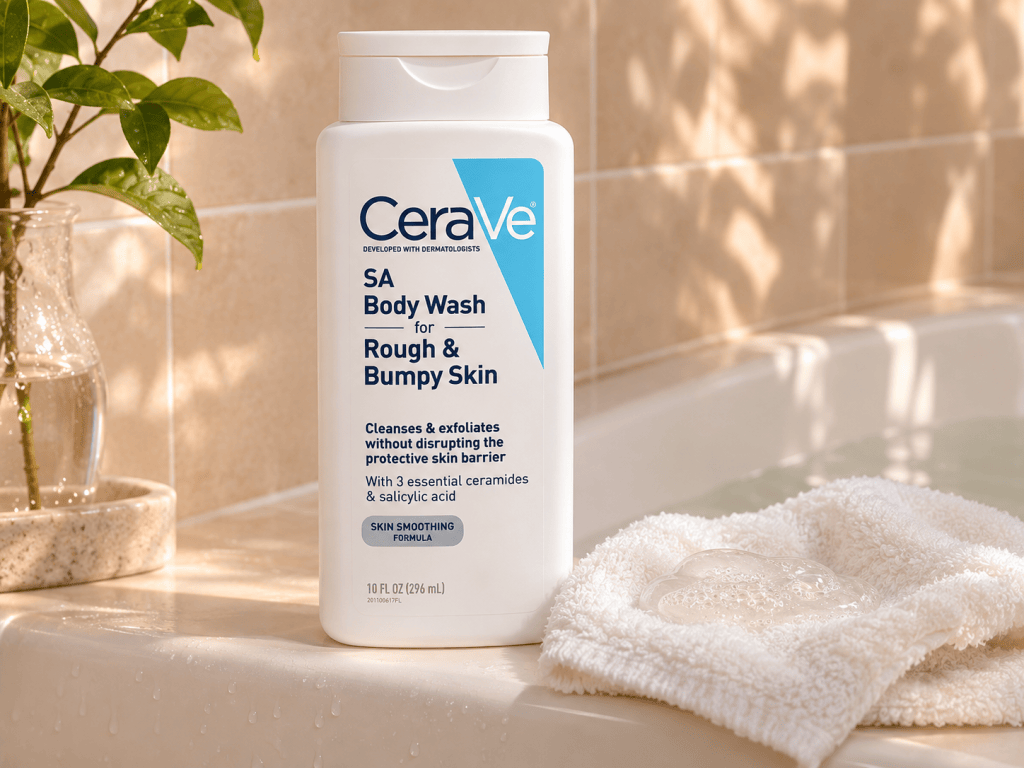
5. CeraVe SA Body Wash
Researched, not tested
Price: $13.99 for 10 fl oz at Dermstore, Walmart and drugstores
If you want the easiest first step, this is it. It’s a body wash with salicylic acid, ceramides and niacinamide. Dermatologist Dr. Muneeb Shah, known as @dermdoctor online, told Bustle that exfoliating cleansers “can help break down some of the keratin” that blocks the follicles.
Acid strength: Salicylic acid, plus a gentle PHA (gluconolactone). CeraVe doesn’t share the percentages.
Pros
- The cheapest and easiest way to start
- Gentler than a leave-on acid because it rinses off
- Also has ceramides and niacinamide
Cons
- Because it rinses off, it has less time to work, so pair it with a lotion
- CeraVe doesn’t list the acid strength
Best for: Strawberry legs, and chicken skin as part of a routine.
One to know about: KP Away, made by a dermatologist with KP
Dermatologist Dr. Anar Mikailov has had KP since high school and created his own brand for it, KP Away. He told theSkimm that he’s used the KP Away Moisturizer ($41) at least daily for about eight years and that it “clears 80 percent of my KP.” Keep in mind he made the product, and it costs more than the drugstore picks above.
Strawberry legs: change how you shave
Products help, but for strawberry legs, how you shave matters just as much. These are the tips from Cleveland Clinic:
- Use a sharp, clean razor, and replace the blade or disposable razor after about six shaves.
- Always use a moisturizing shaving cream or gel.
- Shave in the direction your hair grows, with short, light strokes.
- Shave during or after a shower, when your skin is soft.
- Store your razor somewhere dry, not in the shower.
If shaving keeps causing dark spots, Dr. Janik also mentions epilators, electrolysis and laser hair removal as options that deal with the cause.
A simple routine dermatologists suggest
- In the shower: wash the bumpy areas with a salicylic acid body wash.
- Within 5 minutes after: while your skin is damp, apply a lotion with lactic acid or urea.
- Once or twice a week: use a gentle scrub, never on irritated or freshly shaved skin.
- During the day: wear sunscreen on exposed skin, since Cleveland Clinic notes acids can make skin more sensitive to the sun.
- Be patient: give it 4 to 6 weeks before deciding if it works.
If you’re new to acids, start with one product, not all of them at once, so you can see how your skin reacts.
When to see a dermatologist
Chicken skin and strawberry legs are both harmless, but see a dermatologist if your bumps are itchy, painful, red or spreading, if they look infected, or if nothing has changed after 4 to 6 weeks. They can confirm what it is and offer prescription options, like stronger retinoids, or treatment for folliculitis if needed.
FAQ
Can you get rid of chicken skin permanently?
Not usually. Dermatologists say KP is manageable rather than curable, so the bumps tend to come back if you stop. Dermatologist Dr. Michele Farber told NBC Select it’s more common when people are younger and sometimes goes away on its own.
Is chicken skin the same as strawberry legs?
No. Chicken skin is rough bumps from built-up keratin, often on the arms. Strawberry legs are dark dots in the pores on your legs, usually from shaving, clogged pores or irritated follicles. They can look alike, and the same acid products help both.
Is lactic acid or salicylic acid better for chicken skin?
Both are recommended. Lactic acid exfoliates and hydrates, while salicylic acid works inside the pores. Many popular products, like CeraVe SA Lotion, use both.
Should I scrub chicken skin?
Gently, and not often. Dermatologists suggest physical exfoliation once or twice a week at most. Scrubbing hard can irritate your skin, and dermatologists say it’s one of the most common mistakes.
You might also like: viral body lotions and body oils worth it and viral body mists worth it.
Sources I used
- NBC Select: the best keratosis pilaris treatments (Drs. Garshick, Gmyrek, Sami, Bordone, Farber and Cameron)
- Today: the best products for keratosis pilaris (Drs. Mian, Lamb, Lolis and others)
- American Academy of Dermatology: keratosis pilaris diagnosis and treatment
- Cleveland Clinic: strawberry legs (Dr. Matthew Janik)
- Bustle: how to get rid of strawberry legs (Drs. Shah, Nazarian, Mikailov and others)
- Woman & Home: how to treat chicken skin (Dr. Simon Zokaie)
- theSkimm: a dermatologist with keratosis pilaris shares his routine (Dr. Anar Mikailov)
- AmLactin: 12% lactic acid products
- Eucerin: Roughness Smoothing Lotion, formerly Roughness Relief (10% urea)
I haven’t personally tested any of the products in this post yet. Everything is based on the research above. I’m not a dermatologist, so check with one if your skin is irritated or you’re not sure what you have.


Leave a Reply